Let’s take a look back
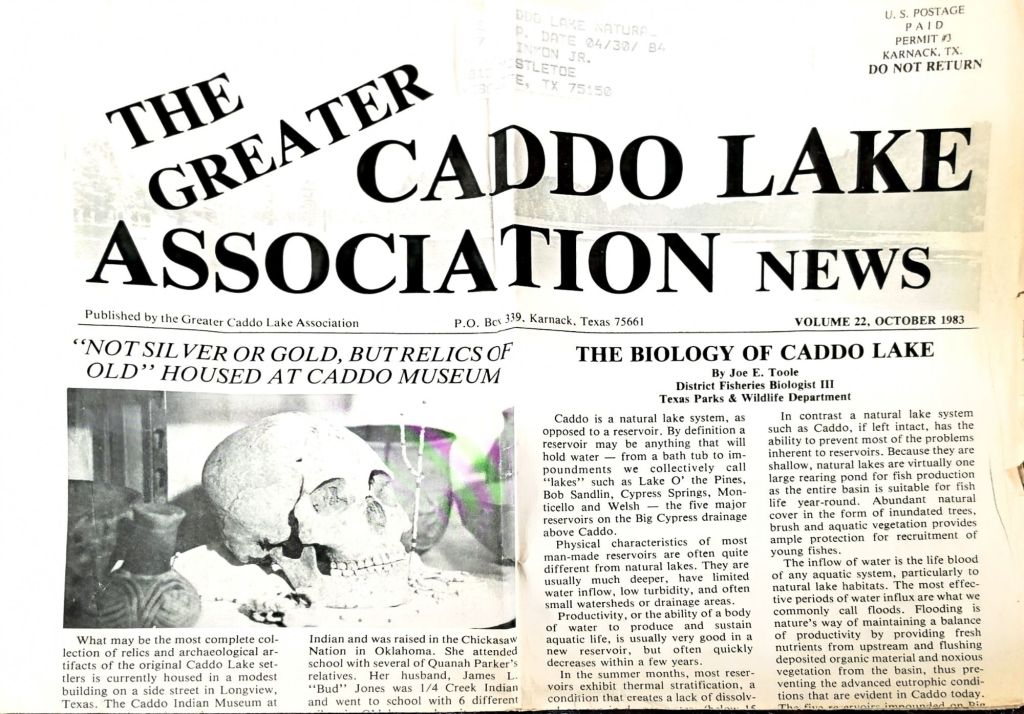
We want to take a look back in time and revisit an article from the Greater Caddo Lake Association News published in volume 22, October 1983. Credit for this piece goes to Joe E. Toole, District Fisheries Biologist III of Texas Parks & Wildlife. I think a lot of what is mentioned in this article not only holds true today but may be even more prevalent than ever. Looking into today’s drought issues, attempted water sells to other portions of Texas, the salvinia epidemic and just human action as a whole impacting Caddo Lake; looking back in time from now puts things into a new perspective.
The Biology of Caddo Lake
Caddo is a natural lake system, as opposed to a reservoir. By definition a reservoir may be anything that will hold water – from a bath tub to impoundments we collectively call “lakes” such as Lake O’ the Pines, Bob Sandlin, Cypress Springs, Monticello and Welsh – the five major reservoirs on the Big Cypress drainage above Caddo.
Physical characteristics of most man-made reservoirs are often quite different from natural lakes. They are usually much deeper, have limited water inflow, low turbidity, and often small watersheds or drainage areas.
Productivity, or the ability of a body of water to produce and sustain aquatic life, is usually very good in a new reservoir, but often quickly decreases within a few years.
In the summer months, most reservoirs exhibit thermal stratification, a condition that creates a lack of dissolved oxygen in deeper waters (below 15 ft. in most n.e. Texas reservoirs) and therefore restricts the habitat area for fish life. Sustained productivity depends greatly on the availability of nutrients in the system. Basic nutrient elements are nitrogen, phosphates and potassium (NPK). Nutrient supply to a lake or reservoir can vary greatly due to water quality, soil types, watershed uses and drainage area. Nutrition is the basic link in the complex food chain of aquatic life. When this link is broken, all life in the system is affected and the ultimate result is a loss of sport fish production.
Conversely, excessive nutrient buildup (eutrophication) may occur which creates excessive biological oxygen demand (BOD) on the reservoir or lake system. Advanced eutrophic conditions may result in large scale fish kills due to oxygen depletion as well as excessive aquatic plant growth and subsequent stagnation.
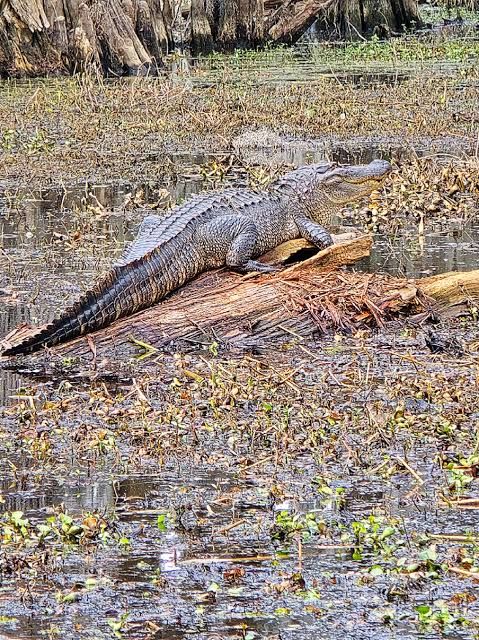
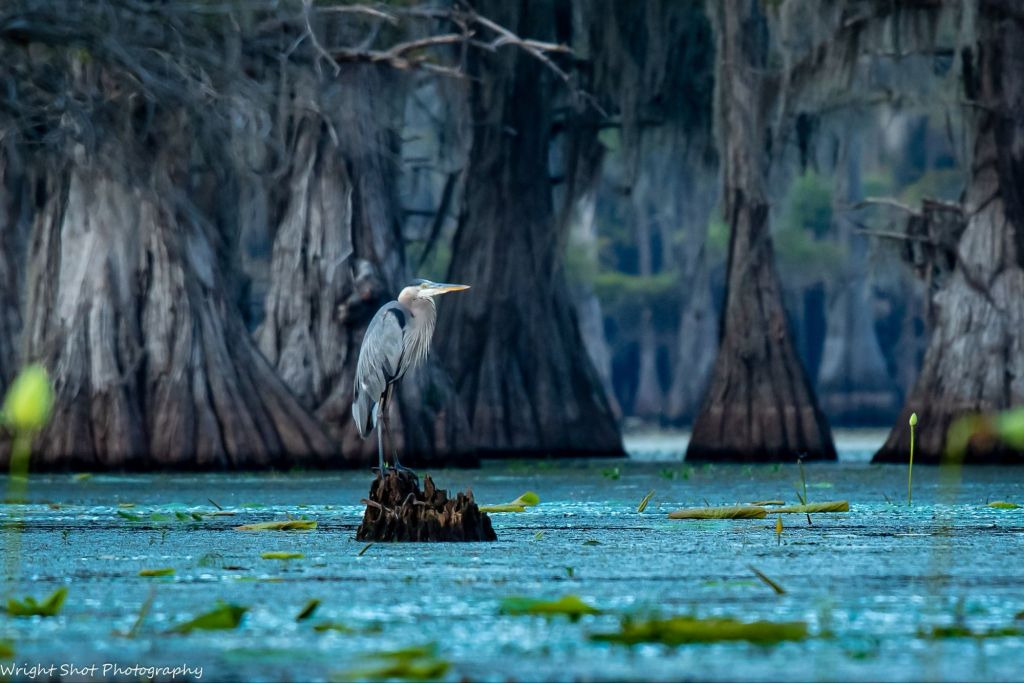
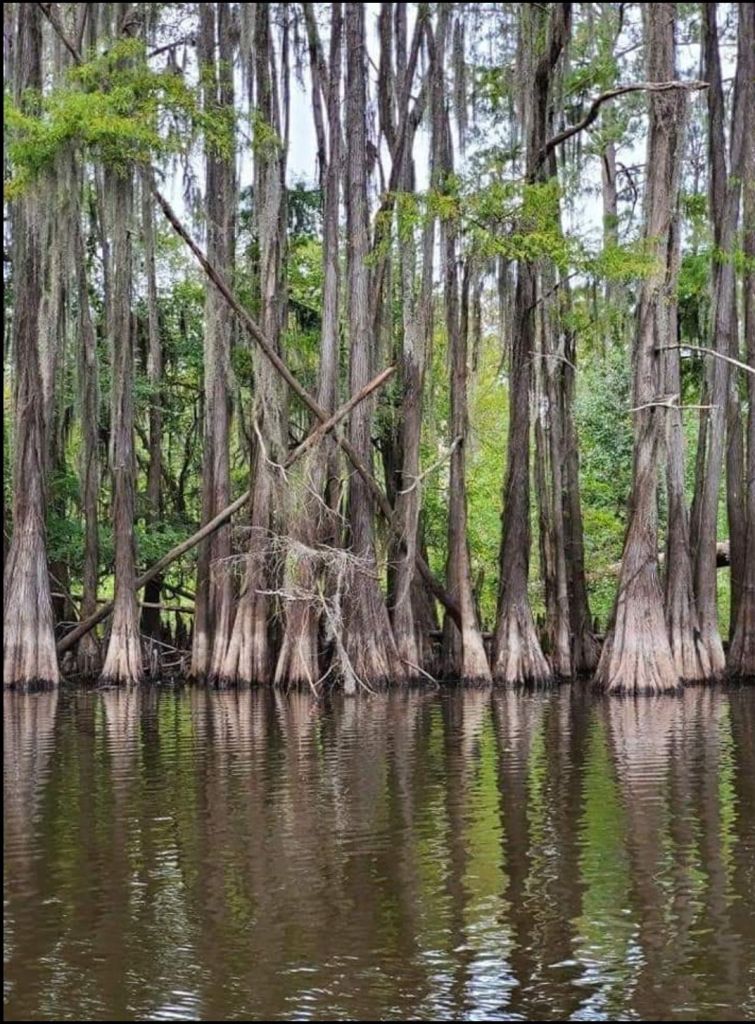
In contrast a natural lake system such as Caddo, if left intact, has the ability to prevent most of the problems inherent to reservoirs. Because they are shallow, natural lakes are virtually one large rearing pond for fish production as the entire basin is suitable for fish life year-round. Abundant natural cover in the form of inundated trees, brush and aquatic vegetation provides ample protection for the recruitment of young fishes.
The inflow of water is the life blood of any aquatic system, particularly to natural lake habitats. The most effective periods of water influx are what we commonly call floods. Flooding is nature’s way of maintaining a balance of productivity by providing fresh nutrients from upstream and flushing deposited organic material and noxious vegetation from the basin, thus preventing the advanced eutrophic conditions that are evident in Caddo today. The five reservoirs impounded on Big Cypress upstream from Caddo represent 35,000 surface acres and over 500,000 acre feet of water – water that used to flow unrestricted into Caddo.
Why were these reservoirs constructed? Priority justification for Lake O’ the Pines was flood control. Bob Sandlin and Cypress Springs are water district impoundments for municipal and industrial water supply. Monticello and Welsh are both power plant cooling water sources. Regardless of why they were constructed, the result is less water for Caddo. An example of overcrowding a stream is evident in this group of reservoirs as water is pumped periodically from Sandlin into Monticello and from Lake O’ the Pines to Welsh in order to maintain water levels for power generation.
Because of these upstream water development projects, Caddo is no longer a free lake system and has acquired typical reservoir problems due to reduced stream flow. Future water development on Little Cypress or Black Cypress will compound the problem.
Major fisheries problems found today in Caddo include: (1) overabundant aquatic vegetation and subsequent decomposition of excessive organic material (nutrients) creating low oxygen levels and water stagnation. (2) overabundance of large gizzard shad that cannot be utilized as forage by most sport fishes. (3) lack of water circulation and /or fluctuations to increase turbidity and reduce organic sedimentation.
Most native fishes in Texas are historically stream fishes. Most have adapted well to reservoir life, but some have not. Good evidence of this is the fact that 71 fish species have been collected and identified from Caddo since basic fisheries survey work was initiated in 1954. To my knowledge, this is a record number of species for any lake in Texas.
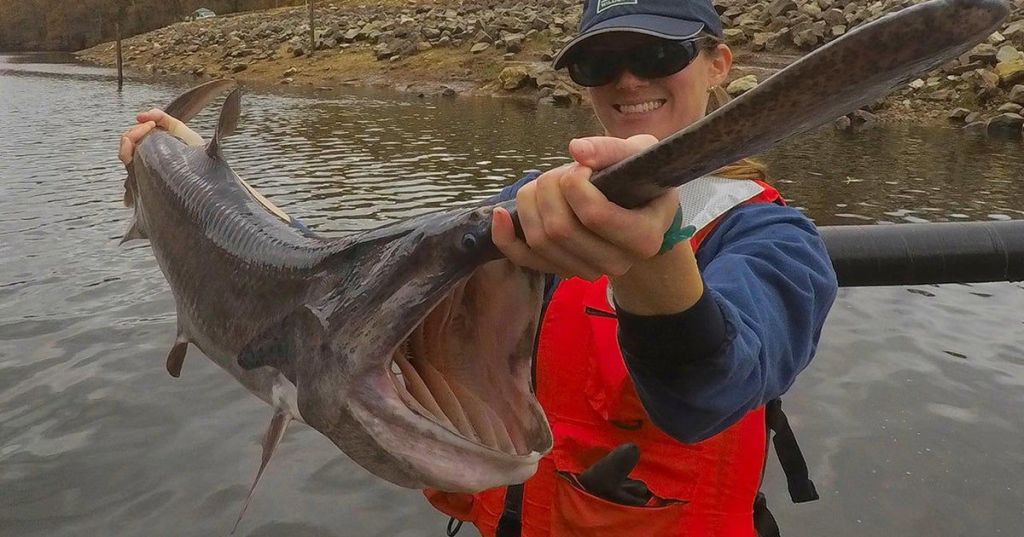
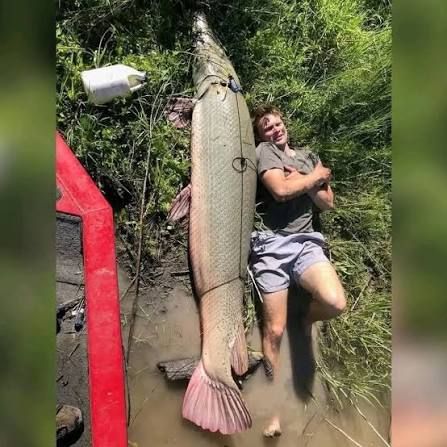
Major sport fishes found in Caddo include the largemouth black bass, channel catfish, flathead catfish, blue catfish, black crappie, white crappie, bluegill, redear sunfish and warmouth. The chain pickerel also provides winter sport to a growing number of anglers.
In 1981 and 1982 a total of 911,765, Florida bass fingerlings were stocked in Caddo to introduce the Florida strain of bass that has proved to be successful in many Texas reservoirs. Evaluation of these stockings has not been made to date.
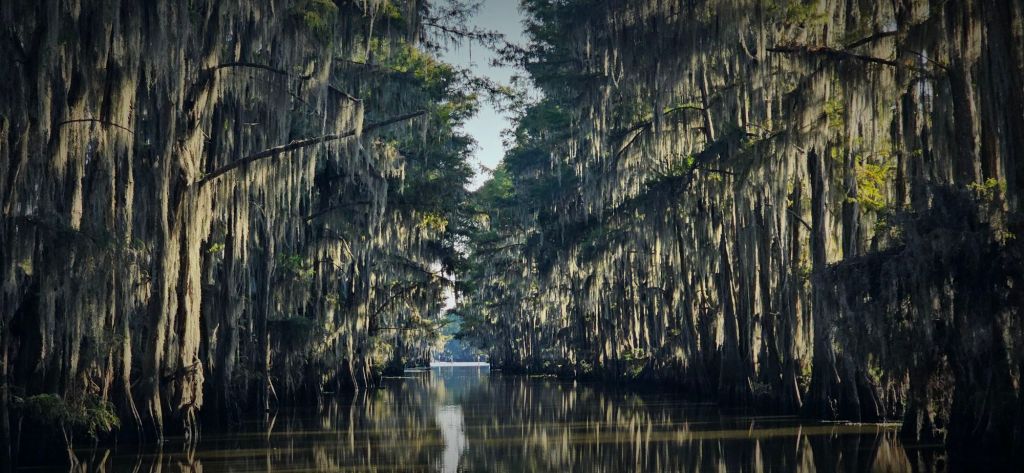
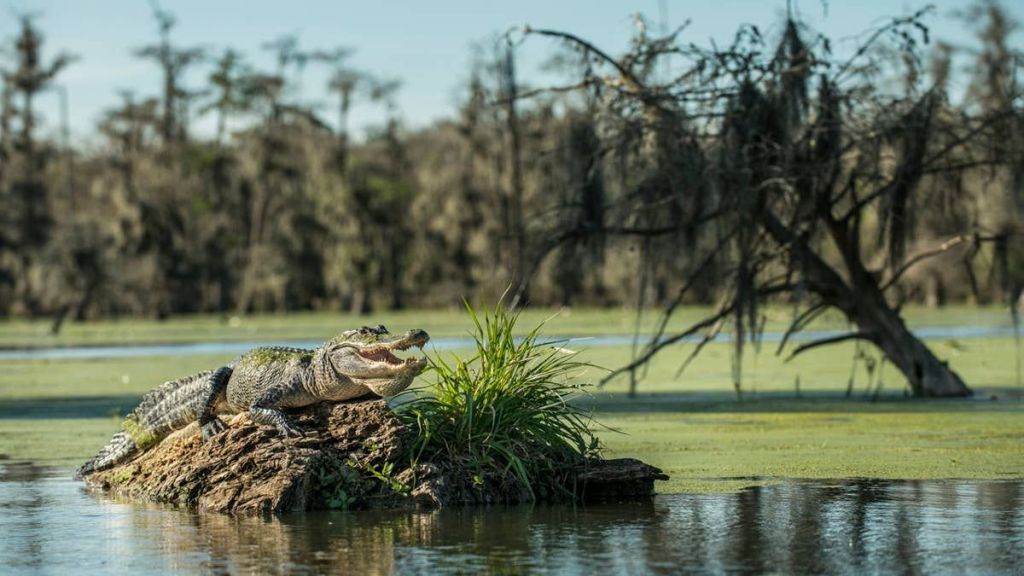
Caddo is beautiful, with a unique majesty that captures the heart of anyone who appreciates nature. It is regrettable, but without annual flood waters to purge the system, Caddo Lake will never again be as natural as it once was. Biologically, we are now forced to compromise more and more for the sake of progress. Your motto “Keep Caddo Lake Natural” is an admirable goal, but it will never be fully achieved.
-Joe E. Toole



Leave a comment